
A sprinkler system can look recently renovated and still contain installation details that create failures only a season or two later. Hunter HydroTech was called to a Royal Oak irrigation system that had reportedly been revamped roughly two years earlier. The symptoms were not caused by one isolated sprinkler head.
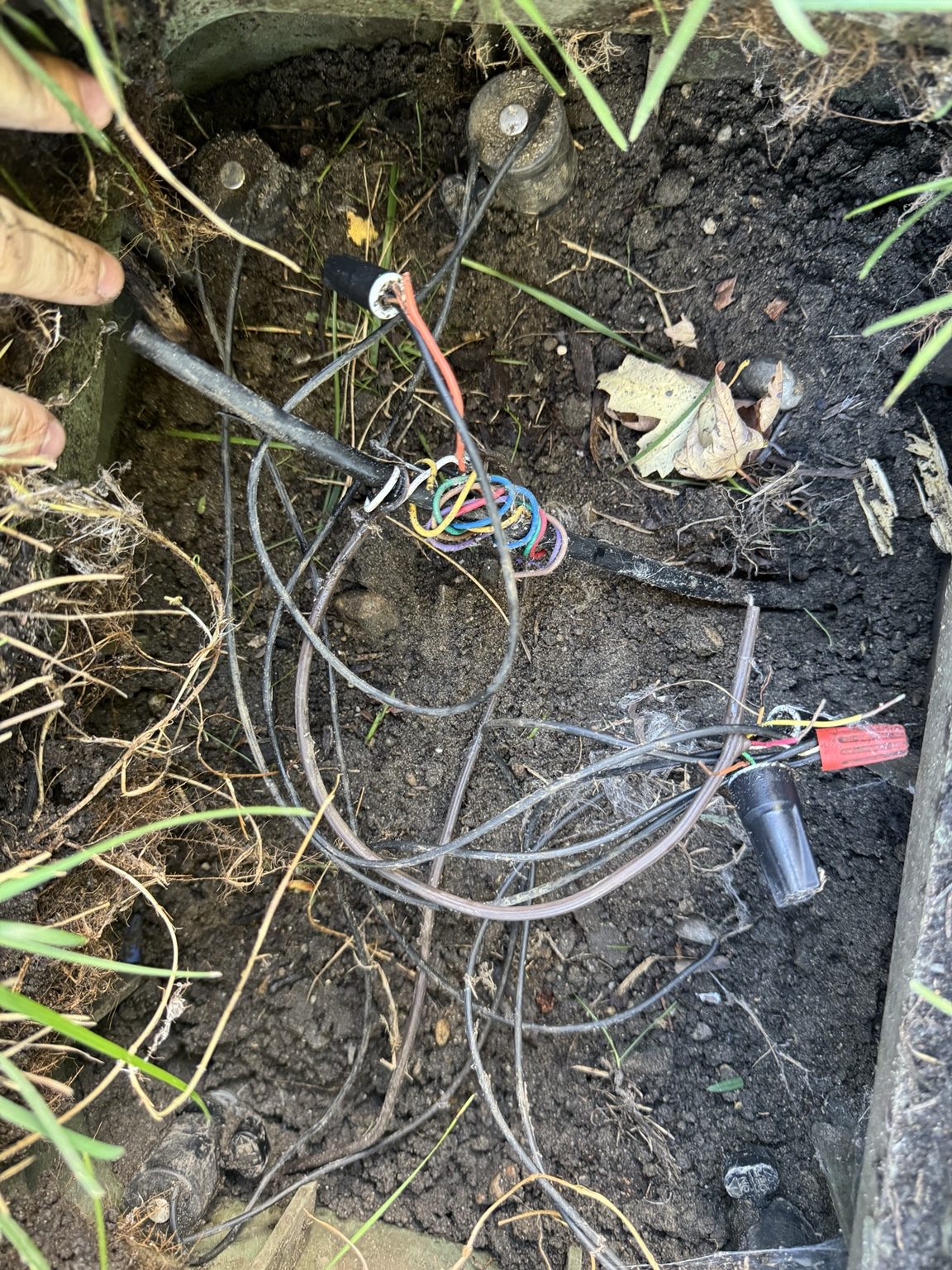
Inspection of the valve and wiring area revealed several separate problems: some irrigation wires had no wire connectors at all, some connections used indoor-style wire nuts in the buried valve environment, the valve box had been positioned so it contacted and damaged a solenoid, one valve was running continuously, another solenoid was buzzing, and a poor wire connection prevented one zone from activating.
This case is useful because the visible symptoms could easily have been treated as several unrelated part failures. The valve-box layout and electrical workmanship were part of the diagnosis.
A recently revamped system should still be serviceable
Revamp work should improve the reliability and serviceability of an irrigation system. That means valves need physical clearance, electrical connections need to be appropriate for the wet underground environment, and the box should protect the assembly rather than press against the components inside it.
When those details are missed, the system may initially operate but become unreliable as soil settles, moisture enters connections or the valve box shifts against the hardware.
Some wire connections had no wire nuts
At this Royal Oak property, Hunter HydroTech found irrigation conductors without proper connectors on multiple wires. Exposed or poorly secured low-voltage irrigation wiring can create intermittent station operation, corrosion and faults that are difficult to diagnose from the controller alone.
A controller may send the correct station voltage while the signal never reaches the solenoid reliably because the field connection is loose or deteriorated.
Indoor wire nuts were also used in the buried valve area
Where connectors were present, some were indoor-style wire nuts rather than connectors intended for irrigation's damp and buried environment. Valve boxes are not dry electrical cabinets. Groundwater, irrigation leakage, condensation and normal soil moisture can all reach the wiring.
Hunter HydroTech prefers professional waterproof irrigation wire connections for field splices. The goal is not merely to twist the wires together; the connection needs to remain dependable in the environment where it is installed.
The valve box itself damaged a solenoid
One of the most important findings was mechanical rather than electrical. The valve box had been positioned on top of or directly against the valve assembly in a way that placed pressure on a solenoid. The solenoid was crushed and broken.
That failure contributed to a valve running continuously. A valve box should provide access and protection. It should not load the solenoid, valve top or wiring simply because the assembly was packed too tightly or the box was set at the wrong elevation.
A constantly running zone needs immediate diagnosis
A sprinkler valve that will not close can waste water quickly and can flood landscaping. The cause can involve the diaphragm, debris, solenoid, manual bleed, controller signal or physical damage to the valve assembly.
On this job, the damaged solenoid and valve-box interference were part of the actual field condition. Replacing a sprinkler head would not have addressed the reason the zone continued running.
Another solenoid was buzzing
A buzzing solenoid is a useful symptom, but it does not automatically prove that the solenoid itself is the only problem. Electrical connections, voltage, controller output and the valve's mechanical condition all need to be considered.
Because this system already had questionable buried wiring connections, Hunter HydroTech evaluated the electrical path rather than treating the sound as an isolated part-replacement decision.
A bad wire connection kept one entire zone from operating
Another zone would not activate because of a poor field-wire connection. This is a classic example of why a dead sprinkler zone should be diagnosed from the controller through the wiring and valve before excavation begins.
If the controller is sending a station command but the connection in the valve area cannot carry that signal reliably, the valve will never receive the command needed to open.
Valve-box layout is part of professional irrigation work
Good valve work leaves enough room to identify wires, service solenoids, open valve tops and replace components without destroying the surrounding manifold. Overcrowding makes every future repair harder and can physically damage components when the box presses against the assembly.
Hunter HydroTech evaluates the valve body, solenoid, wiring, manifold fittings, box position and available service clearance together.
Why we document work like this
The point of this case study is not to identify or attack another irrigation contractor. The useful lesson is that a relatively recent revamp can still fail when buried electrical connections and valve-box layout are not built for the environment.
Homeowners usually see the symptoms: a zone will not turn on, a valve will not shut off, a solenoid buzzes or the controller appears to be working while the lawn stays dry. The technician has to connect those symptoms to the physical cause.
For local service, visit Royal Oak sprinkler valve repair, Royal Oak sprinkler repair, or the Hunter HydroTech valve and manifold service page.
Real Project Documentation
Project Photo Gallery
See the diagnosis, repairs, materials and finished work from this Hunter HydroTech project.
Frequently Asked Questions
Why would a sprinkler zone keep running after the controller turns off?
Should ordinary indoor wire nuts be used in a sprinkler valve box?
Can a valve box damage a sprinkler solenoid?
What can cause a sprinkler solenoid to buzz?
Why would one sprinkler zone not turn on at all?
Professional Irrigation Service
Need help diagnosing your sprinkler system?
Hunter HydroTech provides residential and commercial irrigation repair, pump-system service, valve diagnosis, controller troubleshooting, backflow service, revamps and seasonal maintenance throughout Southeast Michigan.
Related Case Studies Guides
Shelby Township 2026 Winterization Field Report: City Water, Lake Pump & Well Pump
Hunter HydroTech documents three real Shelby Township winterizations: a 9-zone city-water system near 24 Mile and Van Dyke, an 8-z...
Read guide →Rochester Hills Sprinkler Leak Detection: Using Air and Mist to Narrow an Underground Line Leak
Hunter HydroTech used controlled air during a Rochester Hills irrigation diagnosis and watched for visible mist escaping from the...
Read guide →Warren MI 3-Zone City-Water Sprinkler Winterization Near 14 Mile & Schoenherr
Hunter HydroTech winterized a 3-zone city-water sprinkler system near the 14 Mile and Schoenherr corridor in Warren, Michigan and...
Read guide →