
Sprinkler winterization in Shelby Township is not one identical procedure repeated at every house. Hunter HydroTech's 2026 field work includes city-water irrigation, lake-fed pump systems and well/pump systems within the same township. Three recent jobs show why the water source, zone count, pump arrangement and seasonal plumbing should be identified before the compressor is connected.
This field report documents three actual Shelby Township winterizations completed by Hunter HydroTech: a 9-zone city-water system near 24 Mile and Van Dyke, an 8-zone lake-pump system near 22 Mile and Schoenherr, and a 15-zone well/pump system near 24 Mile and Dequindre. The corridor references are intentionally broad and are not customer addresses.
For general scheduling and pricing, visit sprinkler winterization in Shelby Township. This article is different from the general service guide because it focuses on systems Hunter HydroTech actually winterized during the 2026 season.
Job 1: 9-zone city-water winterization near 24 Mile and Van Dyke
The first system was a nine-zone residential irrigation system supplied by city water. City-water winterization starts on the municipal-water side of the irrigation system rather than at a pump. The irrigation supply must be isolated so the compressor is clearing the sprinkler system instead of fighting a continuing water source.
Once the system is isolated, the active stations can be operated individually while compressed air moves water from the mainline and laterals. The important part is not simply seeing one sprinkler head produce air. Each active station needs to be accounted for so a side-yard, spray, rotor or landscape zone is not left full because it was missed.
The 24 Mile and Van Dyke job is a useful local example because it represents the kind of standard city-water system that exists alongside much more involved pump-fed irrigation elsewhere in Shelby Township.
Job 2: 8-zone lake-pump winterization near 22 Mile and Schoenherr
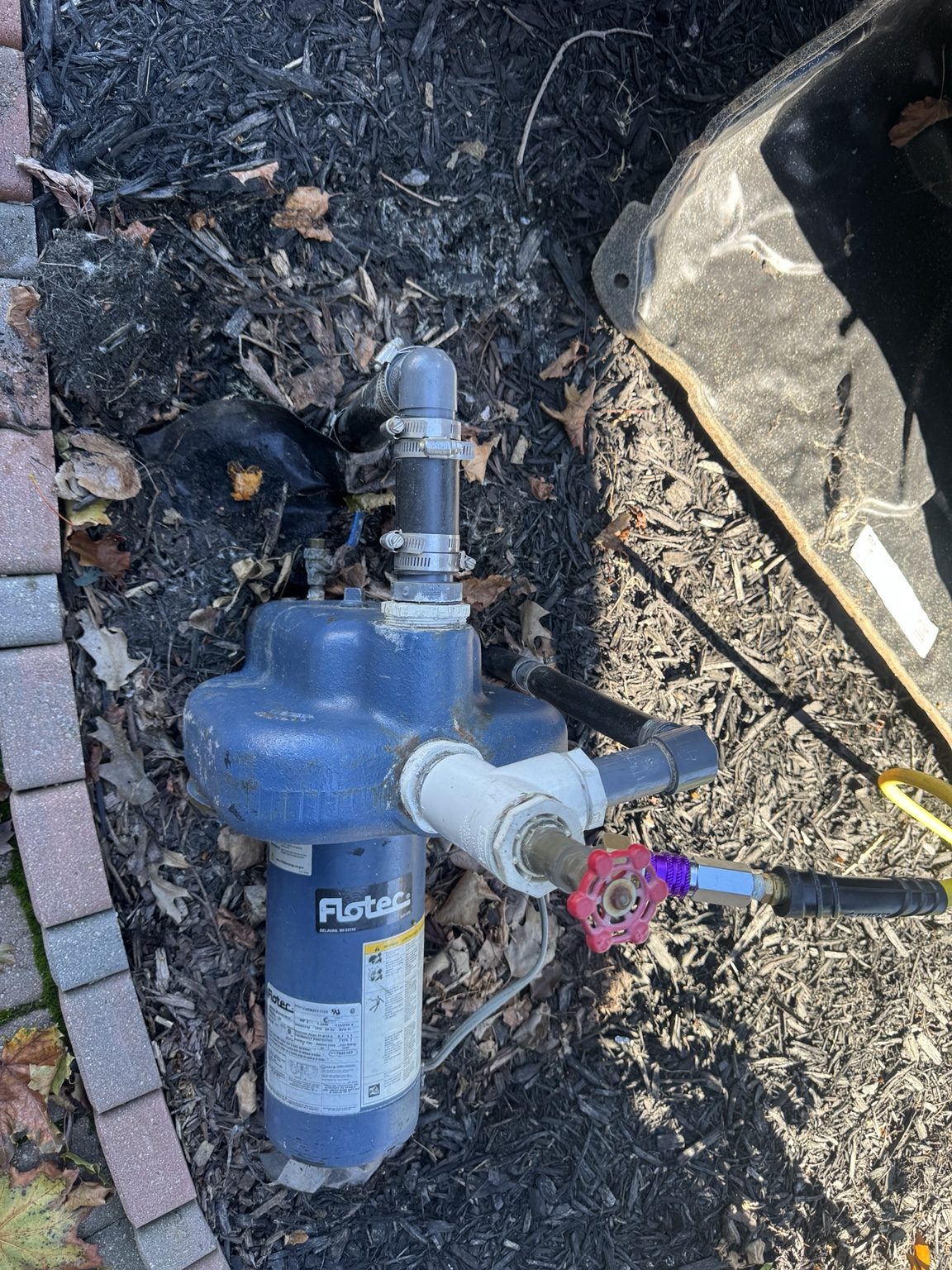
The second system used a lake-fed irrigation pump and had eight zones. That changes the source-side procedure significantly. Hunter HydroTech connected at the pump, removed the master-valve/pump-control wire from the timer, and worked through the controller stations for roughly two to three minutes per zone as conditions required.
After the zones were worked through with the compressor, the pump itself was drained. The master-valve wire was left disconnected and the controller was left off so the drained pump could not be energized accidentally during the winter.
Why the intake was not removed on this property
On pump systems designed for seasonal intake removal, Hunter HydroTech normally removes and drains the intake when the installation allows it. This particular customer's intake did not have a union and had historically never been removed.
That distinction matters. Seasonal service should follow the actual installation rather than forcing apart a component simply because a generic checklist says every intake must be removed. The correct long-term improvement may be to make an intake more serviceable, but winterization is not the time to damage an installation by forcing a connection that was never designed for routine removal.
Job 3: 15-zone well/pump winterization near 24 Mile and Dequindre
The third documented Shelby Township system was a 15-zone well/pump-fed irrigation system near the 24 Mile and Dequindre corridor. The larger zone count alone requires more time than a small residential layout, but the bigger distinction is again the water source.
A pump-fed system adds equipment upstream of the field valves. The pump body, accessible drains, pressure-side plumbing, controller relationship and installed winterization connection all matter in addition to the fifteen irrigation zones themselves.
Hunter HydroTech documented the pump and plumbing arrangement at this property as part of the winterization. That kind of source-side inspection is important because clearing the sprinkler heads does not automatically mean every vulnerable pump-side component has been addressed.
What these three Shelby Township systems show
All three properties needed sprinkler winterization, but they did not need the same source-side shutdown. The nine-zone city-water system depended on the irrigation shutoff and exposed municipal-water irrigation plumbing. The eight-zone lake system required pump draining and protection against accidental dry operation. The fifteen-zone well/pump system combined a larger station count with pump-side seasonal considerations.
This is why Hunter HydroTech asks about the water source and approximate zone count before scheduling. Those two pieces of information help determine the service window and the equipment that may be needed on the route.
Zone count still matters after the water source is identified
Water source determines how the irrigation system is isolated and how source-side equipment is handled. Zone count determines how much field system must then be worked through. A three-zone city-water property and a fifteen-zone pump-fed property should not be scheduled as though they require the same amount of work.
Each accessible station is operated individually. The discharge changes as water leaves the lateral piping, and the technician watches the zone rather than relying only on the controller display. A station that will not open normally can point to a valve, wiring, controller or field problem that should be documented instead of silently skipped.
Winterization is also a final operating check for the season
A fall blowout is primarily freeze preparation, but operating the system can expose conditions worth recording for spring. A non-firing station, leaking shutoff, damaged head, abnormal valve response or pump issue can become a spring repair note instead of an unexpected problem during the first watering cycle.
Hunter HydroTech also provides Shelby Township sprinkler repair, pump-system repair, valve work, wiring diagnosis, controller upgrades and complete system revamps. That broader repair experience helps separate a normal seasonal step from a condition that deserves additional diagnosis.
See more Shelby Township field work
Hunter HydroTech's local Shelby resource at ShelbyTownshipSprinklers.com summarizes these 2026 winterization examples alongside other local irrigation project proof.
To schedule service, visit the main Michigan sprinkler winterization page or book irrigation service online.
Real Project Documentation
Project Photo Gallery
See the diagnosis, repairs, materials and finished work from this Hunter HydroTech project.
Frequently Asked Questions
Does Hunter HydroTech winterize both city-water and pump-fed sprinkler systems in Shelby Township?
What Shelby Township city-water winterization is documented in this field report?
What lake-pump winterization is documented in Shelby Township?
Why was the lake intake not removed on the 22 Mile and Schoenherr job?
What larger pump system is documented in this report?
Why does the zone count matter during sprinkler winterization?
Professional Irrigation Service
Need help diagnosing your sprinkler system?
Hunter HydroTech provides residential and commercial irrigation repair, pump-system service, valve diagnosis, controller troubleshooting, backflow service, revamps and seasonal maintenance throughout Southeast Michigan.
Related Case Studies Guides
Rochester Hills Sprinkler Leak Detection: Using Air and Mist to Narrow an Underground Line Leak
Hunter HydroTech used controlled air during a Rochester Hills irrigation diagnosis and watched for visible mist escaping from the...
Read guide →Royal Oak Sprinkler Repair After a Recent Revamp: Valve Box, Solenoid & Wiring Failures
Hunter HydroTech diagnosed a Royal Oak irrigation system after a relatively recent revamp developed multiple valve and wiring prob...
Read guide →Warren MI 3-Zone City-Water Sprinkler Winterization Near 14 Mile & Schoenherr
Hunter HydroTech winterized a 3-zone city-water sprinkler system near the 14 Mile and Schoenherr corridor in Warren, Michigan and...
Read guide →